

Suite H
Lafayette, IN 47909
GHK-Cu Copper Peptide Therapy in Logansport, IN
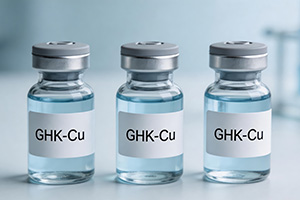
GHK-Cu, commonly called a copper peptide, is a naturally occurring complex formed when the three-amino-acid peptide glycyl-L-histidyl-L-lysine binds with copper.
GHK-Cu has generated interest for skin rejuvenation, collagen support, wound healing, scar appearance and hair-follicle health. Human and laboratory studies have reported favorable findings involving fibroblast activity, extracellular-matrix remodeling, wound closure and hair growth.
Topical copper peptides are available in cosmetic skin and scalp products. GHK-Cu may also be discussed in physician-guided peptide programs using other administration methods. There is no FDA-approved injectable GHK-Cu medication for skin rejuvenation, hair growth, healthy aging or tissue repair.
To learn more about GHK-Cu copper peptide therapy in Logansport, IN, call (765) 259-0545 or contact Charles Turner MD online.
What Is GHK-Cu?
GHK-Cu is a complex of copper and the naturally occurring tripeptide GHK. The letters represent its three amino acids:
- G: Glycine
- H: Histidine
- K: Lysine
The histidine portion of the peptide helps bind copper ions. This creates a stable complex capable of participating in biological processes involving tissue maintenance and repair.
GHK was originally identified in human plasma. It has also been detected in saliva and urine. Researchers have studied GHK and GHK-Cu for their potential influence on:
- Collagen and elastin production
- Fibroblast and keratinocyte activity
- Extracellular-matrix remodeling
- Blood-vessel formation
- Inflammatory signaling
- Antioxidant activity
- Wound closure
- Hair-follicle growth
In cosmetic ingredient labeling, GHK-Cu may appear as copper tripeptide-1. Product names and formulations can vary, so your physician should identify the exact ingredient and delivery method being considered.
Why Does the Body Need Copper?
Copper is an essential trace mineral used by enzymes throughout the body. These copper-dependent enzymes contribute to connective-tissue formation, antioxidant defense, energy production, pigmentation and nervous-system function.
Within the skin, copper participates in processes involving:
- Collagen and elastin cross-linking
- Extracellular-matrix stability
- Antioxidant enzymes
- Wound repair
- Blood-vessel development
- Skin pigmentation
Copper must be delivered and regulated carefully. Free copper ions can participate in oxidative reactions, while peptide-bound copper may provide a more controlled method of transporting copper to biological tissues.
GHK-Cu is studied not simply as a copper supplement, but as a signaling complex that may influence how skin and other tissues respond to damage.
How Is GHK-Cu Thought to Work?
GHK-Cu appears to influence several overlapping repair pathways. Its activity cannot be reduced to a single mechanism.
Laboratory research suggests that GHK-Cu may:
- Stimulate collagen production by fibroblasts
- Support elastin and glycosaminoglycan production
- Promote fibroblast and keratinocyte activity
- Increase selected growth factors involved in tissue repair
- Support formation of new blood vessels
- Influence matrix metalloproteinases and their inhibitors
- Help reorganize damaged extracellular matrix
- Reduce selected inflammatory and oxidative signals
- Support hair-follicle and dermal papilla activity
These actions have made GHK-Cu an area of interest in growth-factor skin rejuvenation, wound care and regenerative medicine.
What Is the Extracellular Matrix?
The extracellular matrix is the structural network surrounding cells. In the skin, it includes collagen, elastin, glycosaminoglycans, proteoglycans and other proteins that contribute to strength, flexibility, hydration and tissue organization.
Skin aging, ultraviolet exposure, inflammation and injury can alter this matrix. Collagen fibers may become fragmented, elastin can lose organization and the skin may become thinner, drier or less resilient.
Effective tissue remodeling requires a balance between:
- Producing new structural proteins
- Breaking down damaged material
- Organizing new matrix
- Regulating inflammation
- Maintaining adequate circulation
GHK-Cu has been studied for its potential influence on both production and remodeling of the extracellular matrix.
Why Are Patients Interested in GHK-Cu Therapy?
Patients may discuss GHK-Cu with a physician when exploring options related to:
- Fine lines and wrinkles
- Loss of skin firmness or elasticity
- Uneven skin texture
- Dry or environmentally damaged skin
- Post-procedure skin support
- Scar appearance
- Wound healing
- Hair thinning or pattern hair loss
- Scalp and hair-follicle support
- Individualized healthy-aging programs
The appropriate treatment depends on the concern being addressed. A topical cosmetic plan for fine lines differs from medical wound care or a physician-guided program for hair loss.
What Does Current GHK-Cu Research Show?
GHK-Cu has been evaluated in cell cultures, animal models and human studies. The amount and quality of evidence differ among skin, wound and hair applications.
Collagen Production Research
Collagen provides structure and tensile strength to the skin. Fibroblasts are the primary cells responsible for producing collagen within the dermis.
A laboratory study reported that GHK-Cu stimulated collagen synthesis in fibroblast cultures at very low concentrations. The effect occurred without a corresponding increase in cell number, suggesting a direct influence on collagen production rather than simply increasing the number of fibroblasts.
This research helped establish GHK-Cu as a signaling peptide associated with connective-tissue repair.
Fibroblast and Growth-Factor Research
Research involving normal and irradiated fibroblasts found that GHK-Cu accelerated fibroblast growth. Irradiated cells treated with GHK-Cu replicated at a rate approaching that of untreated normal fibroblasts.
The treated fibroblasts also produced higher amounts of selected repair-associated growth factors, including basic fibroblast growth factor and vascular endothelial growth factor.
These findings support continued interest in GHK-Cu for skin exposed to environmental stress, radiation or cosmetic procedures.
Extracellular-Matrix Remodeling
GHK-Cu has been shown to influence matrix metalloproteinases, commonly called MMPs. These enzymes help break down and reorganize extracellular-matrix components during tissue repair.
In cultured fibroblasts, GHK-Cu increased MMP-2 expression while also increasing tissue inhibitors of metalloproteinases. This combined activity suggests a role in controlled matrix remodeling rather than unrestricted tissue breakdown.
Proper remodeling may be relevant to the appearance and organization of healing skin and scars.
Human Wound-Healing Research
A multicenter, randomized, evaluator-blinded and placebo-controlled clinical study evaluated topical GHK-Cu gel in patients with diabetic neuropathic ulcers.
All patients received standardized wound care, including debridement, pressure-relieving footwear, diabetes education and daily application of either the active gel or vehicle.
Among plantar ulcers, the GHK-Cu group experienced:
- A median wound-area closure of approximately 98.5% compared with 60.8% for the vehicle group
- A wound-closure rate approximately three times faster than vehicle and standard care
- More favorable closure of larger plantar ulcers
- A lower incidence of ulcer infection when treatment began immediately after debridement
These findings involved a specific topical formulation used as part of structured medical wound care. They should not be used to justify self-treatment of an open wound.
Skin-Rejuvenation Research
Clinical and laboratory research summarized in the medical literature has reported favorable findings involving:
- Skin firmness and elasticity
- Fine lines and wrinkles
- Skin density and thickness
- Photodamaged skin
- Collagen production
- Overall skin appearance
Results depend on the concentration, formulation and ability of GHK-Cu to penetrate the skin. GHK-Cu is hydrophilic, which can limit passive movement through the outer skin barrier.
Newer delivery methods have therefore explored liposomes, specialized carriers and microneedling to support topical penetration.
Hair-Growth Research
GHK and related copper peptides have been studied for their potential influence on dermal papilla cells and hair follicles.
In one human study, 45 men with pattern hair loss used a topical complex containing 5-aminolevulinic acid and GHK peptide or placebo for six months. Both active-treatment groups experienced significant increases in hair count, and one active concentration produced a significantly greater change than placebo.
The study did not find significant differences in hair length or thickness. Because the formulation contained more than one active component, the findings do not establish the independent effect of GHK-Cu.
Laboratory research involving copper peptide analogues has also reported:
- Elongation of isolated human hair follicles
- Increased proliferation of dermal papilla cells
- Changes in signals associated with cell survival
- Potential support for the active growth phase of the hair cycle
GHK-Cu for Skin Rejuvenation
Skin gradually produces less collagen and becomes less resilient with age. Sun exposure, smoking, pollution, hormonal changes and free radicals may accelerate visible changes.
Patients interested in copper peptides may be seeking improvement in:
- Fine facial lines
- Crow's feet
- Skin firmness
- Texture and smoothness
- Dryness
- Uneven tone
- Overall skin quality
GHK-Cu may be included in a broader skin-rejuvenation plan alongside:
- Daily broad-spectrum sunscreen
- Moisturizers and barrier-support products
- Retinoid or retinol skin care
- Antioxidant skin treatment
- Microneedling
- Chemical peels
- Energy-based skin treatments
- Injectable or regenerative procedures when appropriate
Your physician can help determine which combination matches your skin type, treatment goals and tolerance.
Topical GHK-Cu Therapy
Topical GHK-Cu is commonly found in serums, creams, gels and scalp products. Cosmetic labels may list the ingredient as copper tripeptide-1.
The potential advantages of topical treatment include:
- Direct application to the desired skin or scalp area
- Limited systemic exposure compared with injection
- Easy incorporation into a daily skin-care routine
- Compatibility with many noninvasive cosmetic plans
- Ability to discontinue treatment if irritation develops
Product effectiveness depends on more than the presence of GHK-Cu. Relevant factors include:
- Concentration
- Stability
- Vehicle and delivery technology
- Packaging
- Skin-barrier condition
- Frequency and consistency of application
- Other ingredients in the formulation
Your provider may recommend introducing one new product at a time so that irritation or sensitivity can be identified more easily.
GHK-Cu Injections
Some peptide practices discuss GHK-Cu as a subcutaneous or intradermal injection for systemic wellness, skin support or tissue repair.
There is no FDA-approved injectable GHK-Cu medication for these purposes. Most direct human evidence involves topical products rather than systemic injections.
If an injectable protocol is considered, your physician should explain:
- The exact formulation and source
- Why injection is being considered instead of topical use
- The proposed dose and schedule
- How the medication should be stored
- How injections should be administered
- What measurements will be used to evaluate progress
- Known uncertainties and available alternatives
Do not purchase or inject GHK-Cu labeled only for laboratory or research use.
GHK-Cu After Cosmetic Procedures
GHK-Cu is sometimes discussed as part of post-procedure skin care because of its relationship with fibroblasts, collagen and tissue remodeling.
Procedures that create controlled skin injury include:
- Microneedling
- Laser skin resurfacing
- Fractional CO2 laser resurfacing
- Chemical peels
- Radiofrequency microneedling
- Surgical scar revision
Do not apply a cosmetic copper-peptide product to freshly treated or broken skin unless the clinician performing your procedure has approved the exact product. Sterility, ingredients, preservatives and timing are important during post-procedure recovery.
GHK-Cu for Wounds and Scars
GHK-Cu research has focused extensively on wound repair and extracellular-matrix organization. It may be discussed as part of peptide treatment for wound and scar healing.
Potential areas of interest include:
- Supporting collagen production
- Promoting fibroblast activity
- Supporting blood-vessel formation
- Regulating inflammation
- Remodeling damaged extracellular matrix
- Improving the organization of healing tissue
A scar continues to remodel for months after the skin closes. Your physician may combine appropriate topical care with silicone, sun protection, massage, laser treatment, microneedling or another procedure.
Patients seeking treatment for acne scars may require a different approach based on whether scars are depressed, raised, discolored or tethered beneath the skin.
Open wounds, infected wounds, diabetic ulcers and wounds with poor circulation require professional medical care. Copper peptides should not replace debridement, pressure relief, infection management or treatment of the underlying condition.
GHK-Cu for Hair and Scalp Support
Hair growth depends on genetics, hormones, nutrition, inflammation, medications and the activity of cells surrounding each follicle.
Copper peptides have generated interest for their possible effects on:
- Dermal papilla-cell activity
- Hair-follicle size
- Local circulation and growth-factor signaling
- Extracellular matrix surrounding the follicle
- Scalp skin quality
- Hair retention and growth cycles
A physician should evaluate the cause of hair thinning before recommending treatment. Possible causes include:
- Androgenetic or pattern hair loss
- Telogen effluvium
- Alopecia
- Thyroid dysfunction
- Iron or nutritional deficiency
- Hormonal changes
- Medication effects
- Scalp inflammation or infection
GHK-Cu may be considered alongside established options such as topical medication, oral medication, platelet-rich plasma, nutritional correction or laser hair restoration.
GHK-Cu vs. Other Regenerative Peptides
GHK-Cu, BPC-157 and TB-500 are sometimes grouped together as regenerative peptides, but they are distinct substances.
- GHK-Cu: A naturally occurring copper-binding tripeptide studied extensively for skin, extracellular-matrix remodeling, wounds and hair follicles
- BPC-157 : An investigational peptide studied primarily in preclinical models involving gastrointestinal tissues, tendons and other repair pathways
- TB-500 : A thymosin beta-4-related fragment studied in relation to cell migration, blood-vessel formation and tissue recovery
Evidence involving one peptide should not be applied to another. Combining multiple peptides has not been established as more effective than selecting one carefully matched treatment.
GHK-Cu and Microneedling
Microneedling creates controlled microscopic channels within the skin. This stimulates a repair response and may temporarily increase penetration of topical substances.
Laboratory research has demonstrated that microneedles can increase the delivery of GHK-Cu through skin models. This has contributed to interest in pairing copper peptides with professional microneedling.
Only products specifically selected for use with a procedure should be applied to open microchannels. A cosmetic serum intended for intact skin may contain preservatives, fragrances or other ingredients that are inappropriate for intradermal delivery.
Your provider should determine:
- Whether GHK-Cu will be used during or after the procedure
- Which formulation is appropriate
- When topical use should begin
- How often it should be applied
- Which other active ingredients should be paused
Physician-Guided GHK-Cu Evaluation
A consultation should begin with the specific skin, scalp or tissue concern being treated. Your physician may review:
- Your treatment goals
- Skin type and sensitivity
- Current skin-care products
- History of cosmetic procedures
- Hair-loss pattern and duration
- Medical causes of impaired wound healing
- Current medications and supplements
- Previous reactions to copper or topical products
- History of abnormal scarring
- Available alternatives and expected outcomes
A consultation does not mean that GHK-Cu will automatically be recommended. Another topical product, procedure or medical treatment may be more appropriate for your concern.
Testing Before GHK-Cu Therapy
Most patients using a topical cosmetic product do not require extensive laboratory testing. Testing may be appropriate when GHK-Cu is considered within a medical hair-loss, wound-care or injectable peptide program.
Possible evaluations may include:
- Skin or scalp examination
- Standardized baseline photographs
- Hair density or hair-count measurements
- Complete blood count
- Iron and ferritin testing
- Thyroid testing
- Glucose or hemoglobin A1c
- Liver and kidney function
- Copper-related testing when medically indicated
- Wound culture, circulation testing or imaging when appropriate
Testing should be selected according to your symptoms and planned method of treatment.
Important Treatment Considerations
Topical GHK-Cu is generally discussed differently from injectable therapy. Potential considerations depend on the product, concentration and route.
Topical considerations may include:
- Temporary redness, itching or irritation
- Dryness or sensitivity
- Allergic or contact reactions
- Temporary blue coloration from the product
- Reduced stability when combined improperly with other active ingredients
- Variation among cosmetic formulations
Injectable considerations may include:
- Injection-site pain, redness, swelling or bruising
- Headache, nausea or dizziness
- Allergic or immune reactions
- Uncertain systemic exposure
- Variation in product identity, purity and concentration
- Unknown effects of prolonged treatment
Tell your physician if you are pregnant or breastfeeding, have a copper allergy, Wilson disease or another copper-metabolism disorder, significant liver or kidney disease, active cancer or an unexplained skin lesion.
How Is Progress Monitored?
Monitoring should match the reason for treatment.
For skin rejuvenation, progress may be evaluated through:
- Standardized photographs
- Fine-line and wrinkle grading
- Skin texture and smoothness
- Firmness and elasticity
- Hydration and dryness
- Patient-reported satisfaction
For scars or wounds, monitoring may include:
- Wound or scar dimensions
- Rate of closure
- Redness and pigmentation
- Scar thickness and flexibility
- Pain, itching or drainage
- Signs of infection
For hair concerns, monitoring may include:
- Hair counts or density measurements
- Hair shedding
- Standardized scalp photographs
- Hair-shaft diameter
- Scalp irritation
- Patient-reported changes
Visible skin and hair changes generally require consistent treatment and repeat evaluation rather than assessment after only a few applications.
Frequently Asked Questions About GHK-Cu
What is GHK-Cu?
GHK-Cu is a complex formed when the three-amino-acid peptide glycyl-L-histidyl-L-lysine binds copper. It is studied for its involvement in collagen production, tissue remodeling, wound healing and hair-follicle activity.
Is GHK-Cu the same as copper tripeptide-1?
Copper tripeptide-1 is the cosmetic ingredient name commonly used for GHK-Cu. The exact concentration, chemical form and delivery vehicle may differ among products.
Can GHK-Cu improve wrinkles?
Clinical and laboratory research has reported favorable findings involving skin firmness, density, elasticity, fine lines and overall skin quality. Results depend on the formulation, penetration, consistency of use and severity of skin aging.
Does GHK-Cu stimulate collagen?
Laboratory studies have reported increased collagen synthesis in fibroblast cultures exposed to GHK-Cu. The peptide has also been studied for its influence on other components involved in extracellular-matrix production and remodeling.
Can GHK-Cu help heal wounds?
A randomized human study reported faster and more complete closure of certain diabetic plantar ulcers when topical GHK-Cu gel was added to structured wound care. Open or chronic wounds still require professional evaluation and treatment.
Can GHK-Cu improve scars?
GHK-Cu may support processes involved in collagen production and extracellular-matrix remodeling. Scar results depend on the scar type, age, depth, location and use of other treatments.
Can GHK-Cu help hair growth?
A human study of a topical complex containing GHK peptide and 5-aminolevulinic acid reported increased hair counts in men with pattern hair loss. Laboratory studies also support effects on hair follicles and dermal papilla cells. These findings do not establish GHK-Cu as a replacement for approved hair-loss treatments.
Is topical or injectable GHK-Cu better?
The answer depends on the treatment goal. Topical formulations have more direct relevance to skin and scalp applications and more human research. Injectable GHK-Cu has not been established as more effective and does not have an FDA-approved treatment protocol.
Is GHK-Cu FDA-approved?
There is no FDA-approved injectable GHK-Cu medication for skin rejuvenation, hair growth, wound healing or healthy aging. Copper tripeptide-1 may be included in cosmetic products, but cosmetics are not approved as treatments for medical conditions.
How long does GHK-Cu take to work?
Skin-care studies and cosmetic use typically evaluate changes over several weeks to several months. Hair and scar remodeling may require longer follow-up. There is no universal treatment timeline.
Can GHK-Cu be used after microneedling or laser treatment?
GHK-Cu may be incorporated into a physician-guided post-procedure plan. Only an appropriate formulation should be applied to recently treated or broken skin, and the timing should be determined by the clinician performing the procedure.
Can GHK-Cu be combined with retinol or vitamin C?
GHK-Cu may be used within a broader skin-care routine, but combining several active products can increase irritation or affect product stability. Your provider may recommend separating applications or introducing treatments gradually.
What are the possible side effects of GHK-Cu?
Topical products may cause redness, itching, dryness or sensitivity. Injectable protocols may also cause injection-site reactions, headache, nausea, dizziness or unexpected systemic effects.
Who may not be a candidate for GHK-Cu?
Careful evaluation is appropriate for people who are pregnant or breastfeeding, have a copper allergy, Wilson disease or another copper-metabolism disorder, significant liver or kidney disease, active cancer, abnormal scarring or an unexplained skin condition.
Explore GHK-Cu Copper Peptide Therapy in Logansport, IN
If fine lines, skin texture, scars, hair thinning or tissue-repair concerns are affecting your confidence or quality of life, a physician-guided consultation can help you understand your options.
Your physician can evaluate your skin, scalp, medical history and goals before recommending topical GHK-Cu, a professionally administered protocol or another treatment.
Call (765) 259-0545 or contact Charles Turner MD online to request your consultation.
Medical References
- Enhanced Healing of Ulcers in Patients With Diabetes by Topical Treatment With GHK-Cu
- Stimulation of Collagen Synthesis in Fibroblast Cultures by GHK-Cu
- GHK-Cu Stimulates Extracellular-Matrix Remodeling in Fibroblast Cultures
- Effects of Copper Tripeptide on Fibroblast Growth and Growth-Factor Expression
- Copper Peptide Support for LED-Stimulated Fibroblast and Collagen Activity
- Efficacy of a GHK-Containing Complex on Hair Growth
- The Human Tripeptide GHK and Tissue Remodeling

Hours and Directions
Innovative Medicine
Address
3554 Promenade PkwySuite H
Lafayette, IN 47909
(765) 259-0545
www.innovativemedicine.org
Hours
Mon:
8:30 am - 5:00 pm
Tue:
8:30 am - 5:00 pm
Wed:
8:30 am - 5:00 pm
Thu:
8:30 am - 5:00 pm
Fri:
Closed
Sat:
Closed
Sun:
Closed

